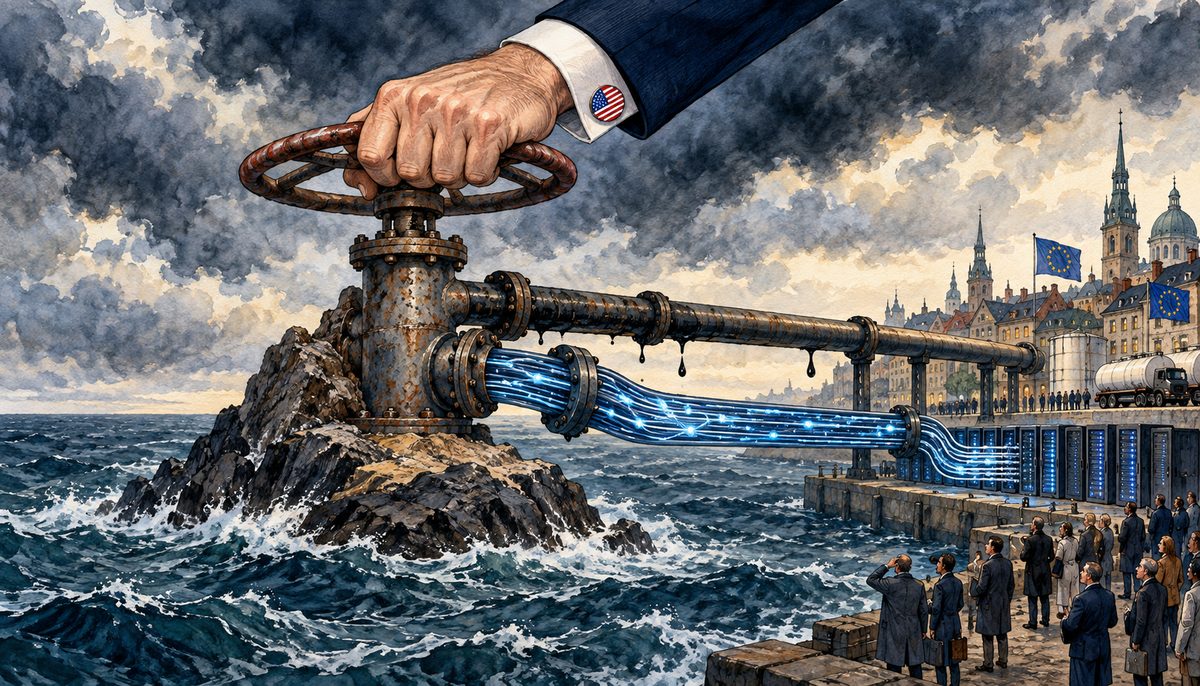
 AI-generated
A US diesel export ban would probably backfire at home: refineries cannot make diesel without petrol, so trapped diesel means lower runs and dearer petrol. That Washington is weighing it anyway, weeks before the midterms, matters more than the outcome. Access to American technology is already a negotiable licence, and Europe sits inside the US cloud stack. The answer is insurance, not independence: open-weight models on European compute.
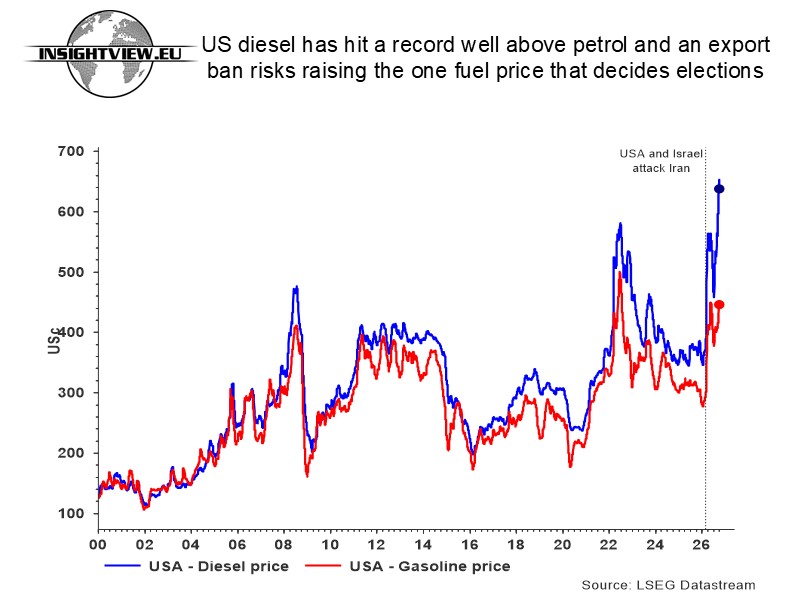
Donald Trump says he is still considering a ban on US diesel exports. [Read the Reuters article, Trump says he is still considering diesel export ban.] His own energy and interior secretaries have argued against export restrictions all year, and the refiners' trade association has pushed back sharply. The White House has denied preparing a flat ban, then kept the option alive.
Whether it happens is almost secondary. A US president seriously weighing an export measure that hurts American producers and America's closest allies, five weeks before an election, is the information Europe should act on. Not in fuel, where the damage is temporary, but in AI, where it may not be.
A refinery is a slaughterhouse.
A slaughterhouse cannot produce only fillet. Every pig also yields shoulder, bacon and mince in roughly fixed proportions. Ban exports of the fillet, and the abattoir is stuck with it. Its price falls, slaughtering fewer pigs becomes the rational response, and the supply of every cut falls - including the bacon sold at home.
Refineries work the same way. A 42-gallon barrel of crude yields about 19-20 gallons of petrol and 11-13 gallons of diesel and heating oil. [Read the article, How many gallons of gasoline and diesel fuel are made from one barrel of oil?.] Trap diesel at home, and the Gulf Coast, which produces far more diesel than it consumes, fills up.
A refiner that cannot sell its diesel at a profit does not keep making it; it cuts crude runs. And every barrel not processed is also petrol and jet fuel not produced.
Petrol is the bacon in this story. Diesel moves trucks, tractors and freight; petrol fills the family car - the fuel most American voters actually buy, at a price posted on every street corner. The American Petroleum Institute spells it out: blocking diesel exports would force run cuts and reduce supplies of petrol, jet fuel and diesel at the same time. Energy Secretary Chris Wright has warned that a ban would quickly reduce petrol production, [Read the article, Trump supports diesel export ban as fuel prices hit records]. Others warn that refiners could be forced to cut product supply within weeks, making a ban ultimately self-defeating.
Markets have already priced the sequence. When Politico reported plans for a 90-day ban, diesel cracks fell by $12.70 a barrel while petrol cracks rose by $2, as traders bet on lower refinery runs. Analysts expect any relief at the diesel pump to be temporary at best, and confined to a few regions. [Read the article, Trump says administration is weighing diesel export restrictions.] Less jet fuel, meanwhile, means dearer flights.
A measure meant to help truckers and farmers before an election could end up raising the one fuel price that decides elections. Even that temporary relief would not reach all Americans. Pipeline bottlenecks and the century-old rule requiring US-built ships between domestic ports would keep prices high in the Northeast. [Read the article, Trump backs possible US diesel export ban as prices hit record high.]
Europe would bear the rest. The US supplied roughly half of Europe's seaborne diesel imports in August, [Read the article, Diesel Cracks Plunge on U.S. Export Ban Report], and Europe, structurally short of diesel for years, lost its Russian supply in the war.
Why it is on the table anyway.
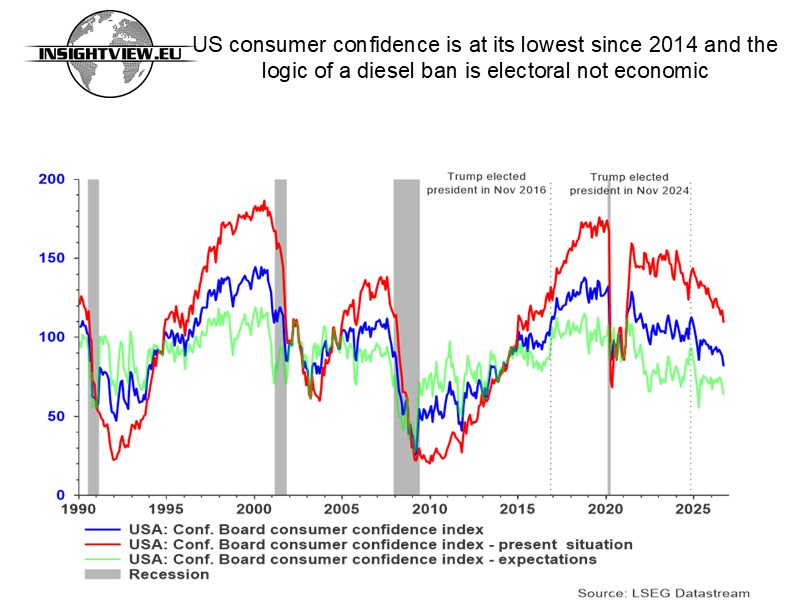
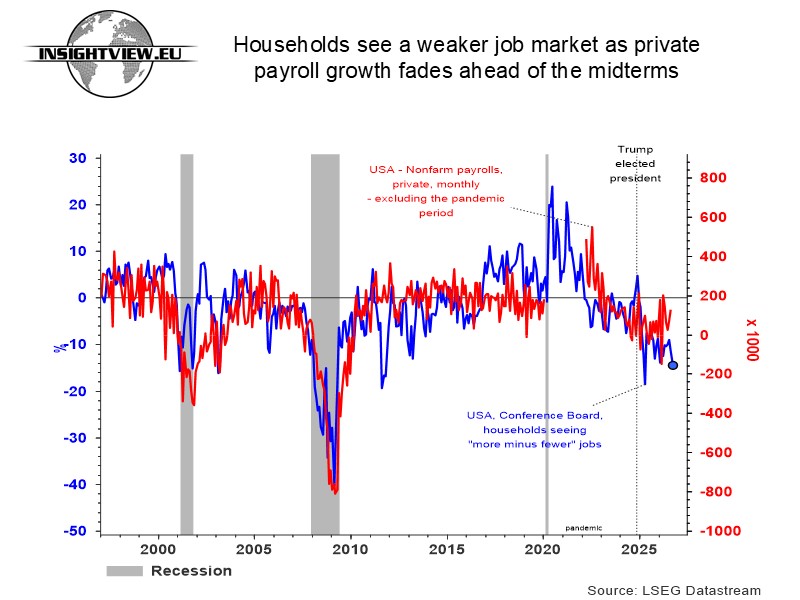
Because the logic is electoral, not economic. US consumer confidence fell to 81.9 in September, its lowest level since 2014, while households' view of the job market has deteriorated alongside private payrolls. [See the charts below.] Republican candidates in the tightest Senate races have called for a ban, and an industry executive told Politico that the president regards any blowback as "a December problem". This is transactional politics in its purest form. The voter in Ohio outweighs both the refiner in Texas and the haulier in Rotterdam.
The energy economist Philip Verleger has warned that a US diesel ban, even a temporary one, would have the same long-term effect as Richard Nixon's soybean embargo: the world would stop seeing America as a dependable source. [Read the article, Explainer: Ban on US diesel exports would hurt, not help fuel markets, analysts say.]
History is on his side. Nixon embargoed soybean exports in June 1973 to curb food inflation, and lifted the ban by October. Japan, dependent on American soybeans, drew the conclusion that mattered. Since 1974, it has financed the development of Brazil's Cerrado, a programme that ran for about 20 years. Brazil is now the world's largest soybean exporter. A three-month embargo created a permanent competitor.
The switch already exists in AI.
In January 2025, the AI Diffusion Rule split EU member states between unrestricted and capped tiers for AI chips. [Read the TechCrunch article, Trump administration officially rescinds Biden's AI diffusion rules, 13. May 2025.] It was rescinded before taking effect, but the template exists. Later that year, Nvidia and AMD agreed to hand Washington 15% of their revenue from AI-chip sales to China in exchange for export licences. [Read the article, Nvidia, AMD to pay 15% of China chip sale revenues to US, official says.] Access to American technology has become a priced, negotiable licence.
When the US sanctioned the International Criminal Court's chief prosecutor, he lost access to his Microsoft email, AP reported. [Read the article, Trump's sanctions on ICC prosecutor have halted tribunal's work.] Microsoft insists it never suspended services to the court itself. Europe heard the warning either way.
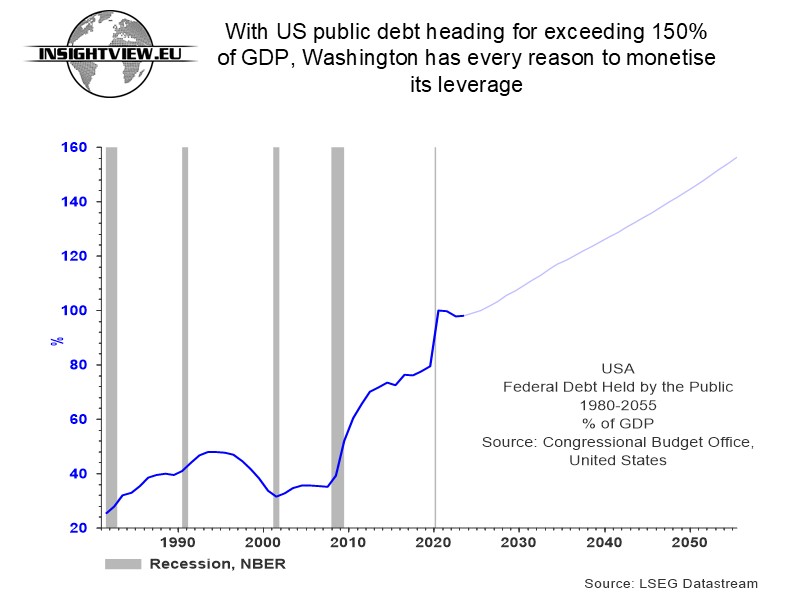
Insightview adds a fiscal reading. US federal debt "held by the public" is projected to exceed 150% of GDP by 2056. [See the charts below.] A state with that trajectory has every reason to monetise its leverage, and AI is the most valuable leverage America has.
Europe is already inside the American stack.
The usual explanation for Europe's dependence is the model gap. Seen from Europe, the distance between Mistral and the frontier of Anthropic, OpenAI and Google has, regrettably, widened rather than narrowed. But that is the smallest part of the problem. If a European model matched the best tomorrow, the plumbing would still be American.
Amazon, Microsoft and Google hold about 70% of Europe's cloud market; European providers hold around 15%. [Read the article, European Cloud Providers' Local Market Share Now Holds Steady at 15%, 24. July 2025.] AI is sold as a layer on top of the cloud a company already rents, where its data already sit. The US hyperscalers invested around €10bn a quarter in European infrastructure in 2025. [Read the article, More data shows EU cloud companies are struggling to compete with US giants.] Europe's digital backbone is largely financed with American capital.
Even "sovereignty" is built on American technology. OpenAI for Germany, the flagship sovereign AI service for Germany's public sector, is built to run on SAP's Delos Cloud using Microsoft Azure technology. [Read the article, SAP and OpenAI partner to launch sovereign 'OpenAI for Germany', 24. September 2025.]
Furthermore, Europe's champions vote with their capex. Siemens' chief executive warned in April that most of the group's €1bn industrial AI investment would go to the US unless Brussels changed course, blaming the EU's AI Act and Data Act. [Read the Bloomberg article, Siemens Warns EU's AI Rules Will Deter Investment in Europe.] Brussels has since agreed to carve machinery out of the AI Act. [Read the article, EU agrees to amend AI Act, clarifies overlap with machinery rules.] The latter was a first step, not a cure. Part of the dependence is self-inflicted.
Insurance, not independence.
"Whatever it costs" is the right instinct but the wrong policy. Europe cannot replicate the full stack - leading-edge chip fabrication, hyperscale cloud and frontier models - on any reasonable timeline. Diesel points to the alternative. Europe does not need to refine all its own diesel; it needs diversified suppliers and stocks.
For AI, the equivalent is a credible fallback: open-weight models running on European-controlled compute, able to keep critical functions in public administration, finance, health and defence running if access is throttled. American companies are already embracing cheaper open models; [Read the FT article, Corporate America embraces cheaper 'open' AI models.] Europe has a strategic reason, too. Chinese open-weight models are no answer; they swap one dependency for another. And the fallback requires Brussels to keep lightening the rules that threaten to send Siemens across the Atlantic, not just to spend money.
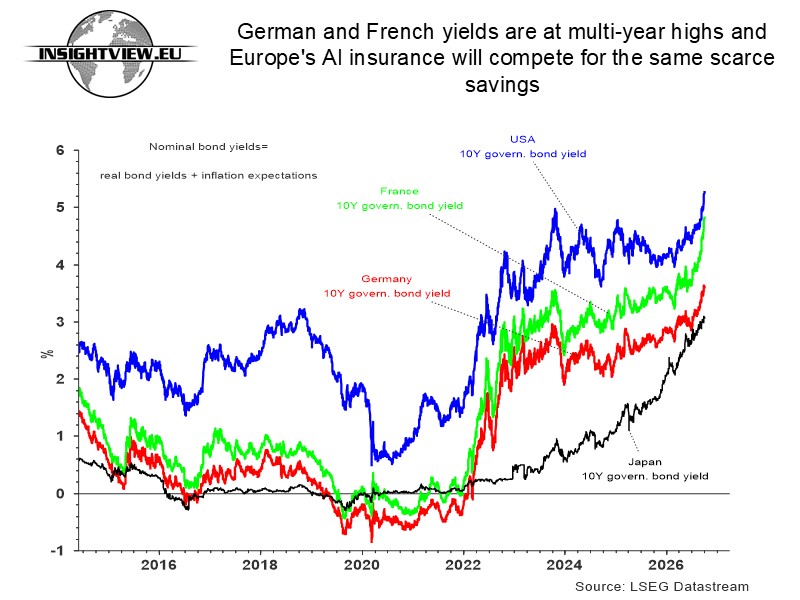
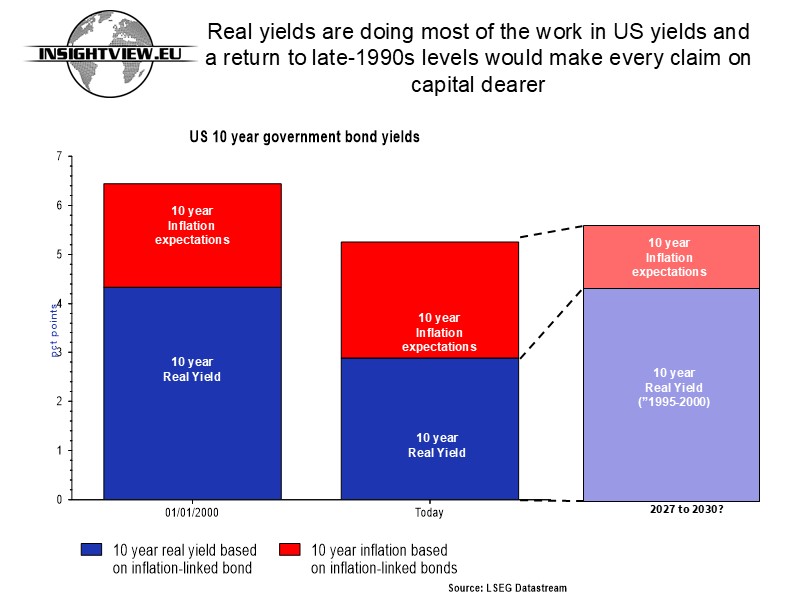
The premium is already visible. German and French ten-year yields are at multi-year highs, and in the US real yields are doing most of the work. [See the charts below.] Autonomy competes with defence, energy and ageing for the same scarce savings - Phase 1 of Insightview's AI framework in practice. But the premium rises with time. Japan's soybean insurance took two decades to mature.
What this means.
For European companies, AI dependency should be treated like energy dependency: map which critical workflows rely on US models and US cloud, insist on portability and exit clauses, and keep the architecture model-agnostic. For investors, the European revenues of US hyperscalers carry a policy risk that is not priced. European compute, grid and power infrastructure are the likely beneficiaries of an insurance build-out - and European bond yields will carry its cost.
The diesel ban may never happen. The rehearsal already has.