 AI-generated
US Treasury Secretary Bessent's tripled $6 billion buyback and 'I am the house now' yen intervention both failed to stop yields rising, with the 10-year above 4.85% and real yields at 2.46%. Insightview argues this reflects capital scarcity from AI and defence capex and a shrinking pool of natural buyers, as Japan, Norway and the Netherlands quietly reduce exposure to US assets.
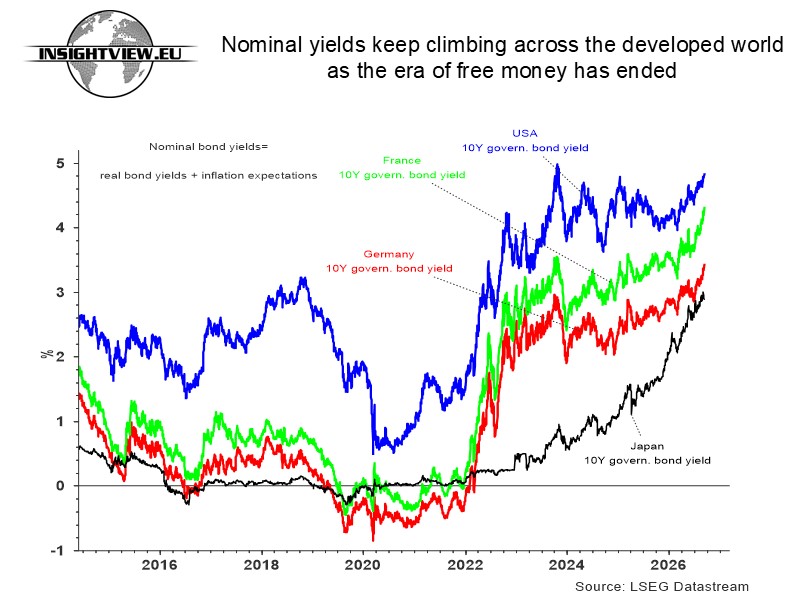
Scott Bessent had a busy Tuesday. This week, the US Treasury Secretary declared, "I am the house now," boasting that his coordination with Japanese officials on yen intervention gives him privileged insight into the Bank of Japan's next move. [Read the Bloomberg article, Bessent Dares Traders to Bet Against Yen: 'I Am the House Now'.] The same week, the Treasury tripled its bond buyback to $6 billion, meant to calm what Bessent has called a "fever" in the bond market. Markets had priced in closer to $10 billion. The 10-year Treasury yield rose above 4.85% anyway — its highest level in nearly three years — while the 30-year touched levels last seen in 2007. Two interventions, both brushed aside by the very market Bessent claims to run.
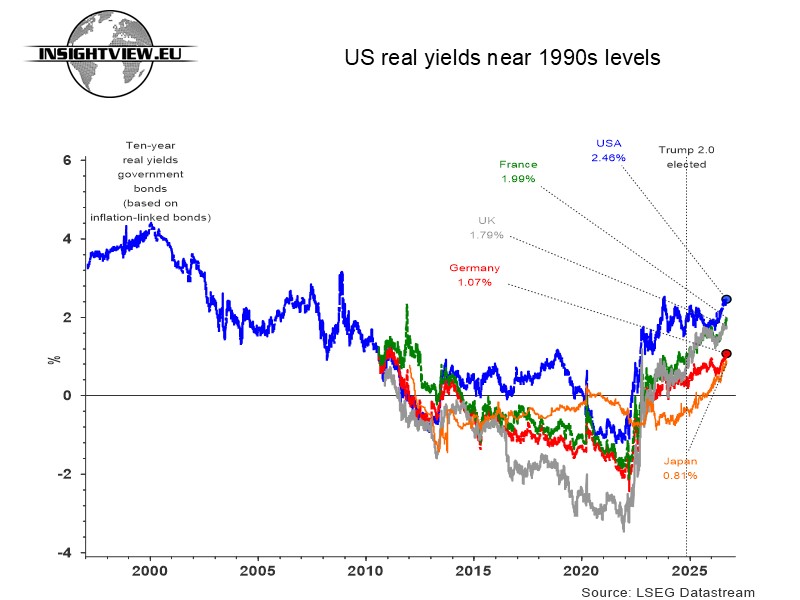
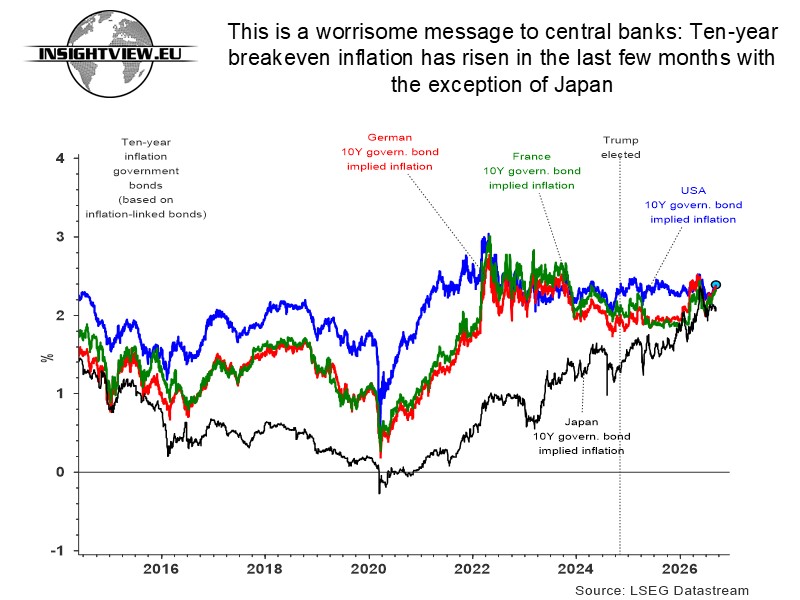
What is actually rising in the US bond market is the price of capital, and lately, even fear of inflation. Ten-year US real yields — nominal yields stripped of inflation expectations — now stand at 2.46%, their highest since before the 2008 financial crisis and close to where they sat through most of the 1990s. Ten-year breakeven inflation, by contrast, has moved only modestly and remains below its 2022 peak.
Insightview's reading is that this feels "extreme" mainly to a generation of investors whose entire careers have unfolded inside the abnormally cheap-money regime of 2009–2021 — itself the historical outlier, not the 1990s levels US real yields are now approaching. Judged against that longer history, and against public finances considerably healthier in the 1990s than today - not to forget outsourcing to China - this looks less like a crisis than a reversion to the mean. Admittedly, the "normalisation process" will hurt.
The Mechanism Is Capital Scarcity.
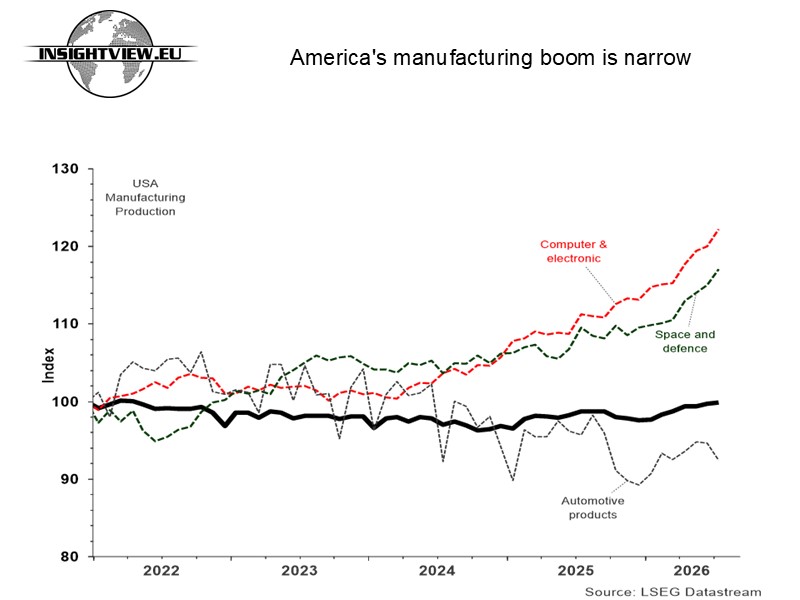
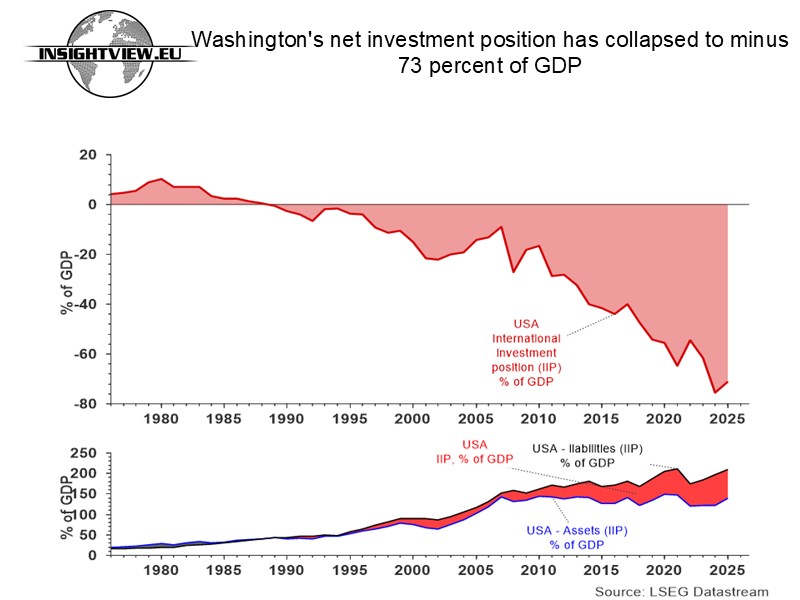
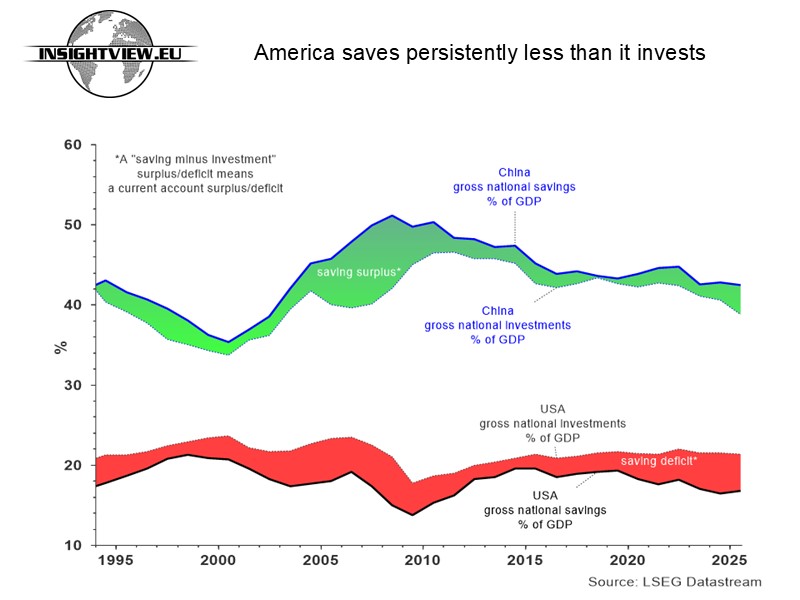
America's manufacturing base is being pulled almost entirely by computer/electronics and space/defence output, even as automotive production keeps falling and the broader index stays flat—a textbook crowding-out signature in which AI and defence capex absorb capital, labour, and components that would otherwise flow elsewhere. That capex is, to no small extent, financed from abroad: the US saves persistently less than it invests, and its net international investment position has deteriorated to roughly minus 73% of GDP, from near balance in the late 1980s. The link between a widening US financing gap and rising real yields is well established; how much of the marginal pressure is specifically AI-related, rather than deficits generally, is, of course, Insightview's interpretation rather than a directly measured fact.
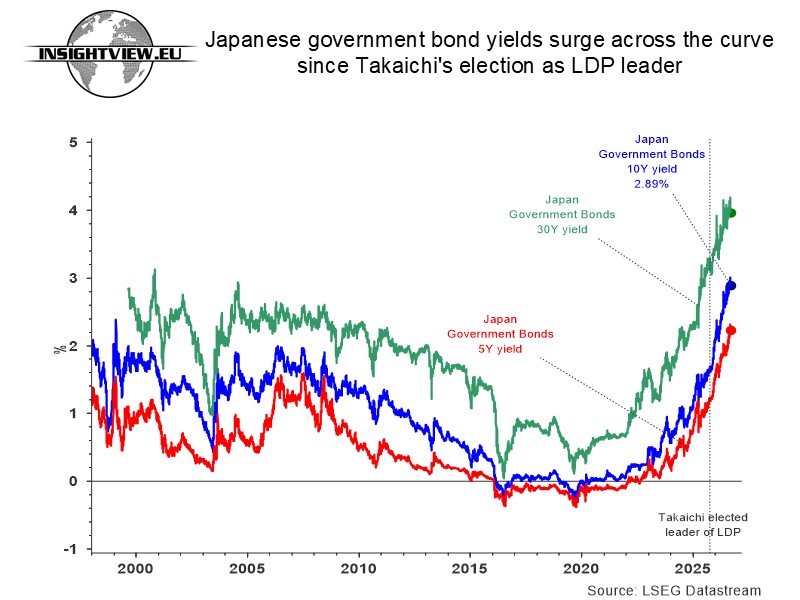
The squeeze is tightening more aggressively now because America's largest external creditor has its own capital needs. Japan holds $1.1 trillion of US Treasuries, more than any other country, and Bessent's yen intervention is partly designed to keep it that way — a stronger yen, engineered with Tokyo's cooperation, reduces Japan's need to sell Treasuries to defend its currency. However, this is a highly inefficient way to create a firm flow back into yen. However, sooner or later, "perception about what is coming" will help the yen and erode support for the US bond market.
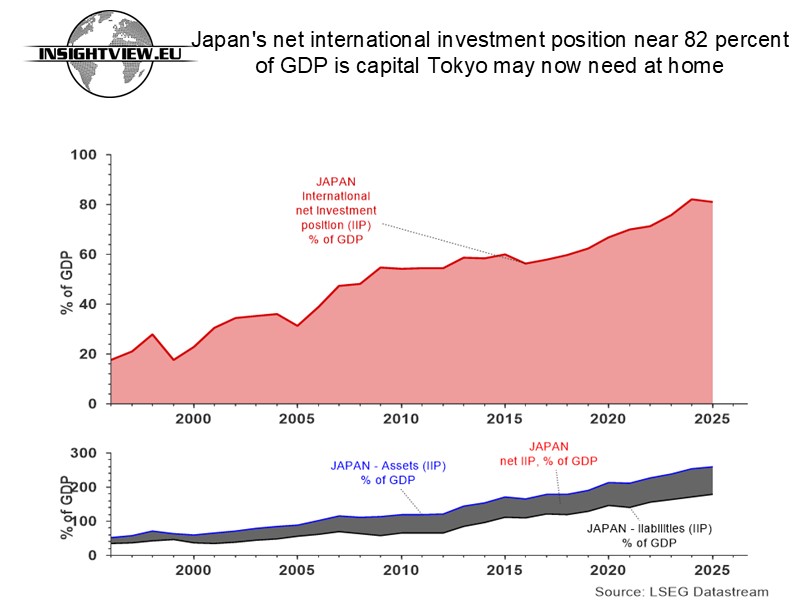
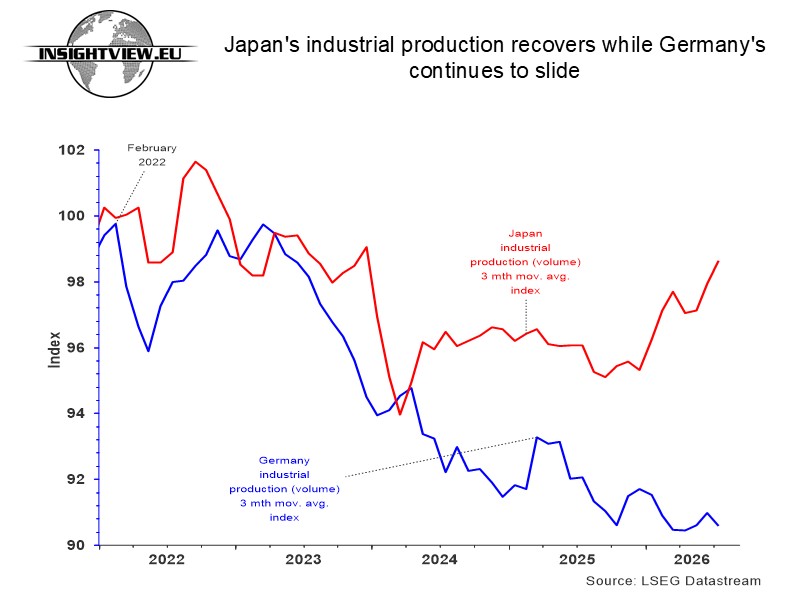
Japan needs "real flow" back to Japan because the Bank of Japan can no longer print its way out of the country's demographic decline. Japan itself faces a defence and AI investment programme aimed at reducing dependence on both China and the United States. With Japan's own net international investment position near 82% of GDP, the capital exists — but deploying it at home is precisely what would make ever-larger Treasury purchases from Tokyo less automatic than markets have assumed.
A Trust Deficit, Not Just a Financing Gap.
Two further signals this month point the same way, though they should not be conflated. The Dutch central bank moved 86 tonnes of gold, worth roughly $10 billion, from New York and Ottawa to London, citing "increasing geopolitical unrest" and a need for "crisis readiness." [Read the CNN article, Dutch central bank shifts billions in gold from US to Britain in 'crisis preparedness' move.] That is a custody decision about trust, not a yield trade.
Norway's $2.3 trillion wealth fund, by contrast, has proposed cutting government bonds from 70% to 50% of its fixed-income benchmark, a shift that could remove up to $80 billion from its roughly $215 billion of US Treasury holdings. [Read the CNBC article, World's biggest sovereign wealth fund plans to cut U.S. Treasury holdings.] Different motives, maybe, but the same direction.
Oil Is the Distraction, Not the Threat - Unless Trump's Make It Worse.
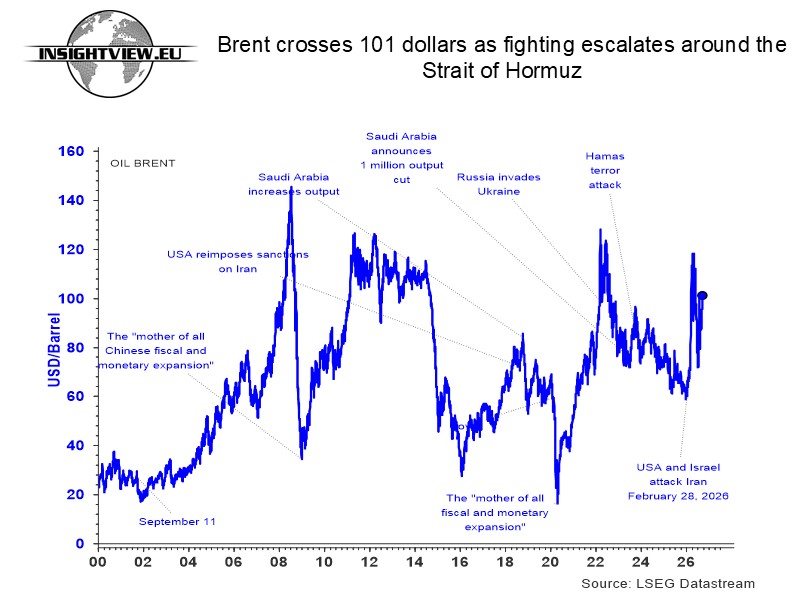
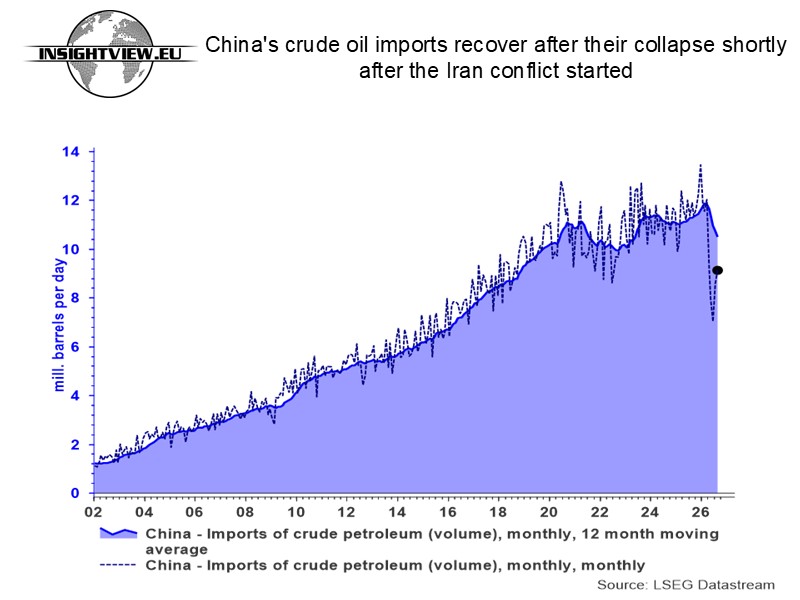
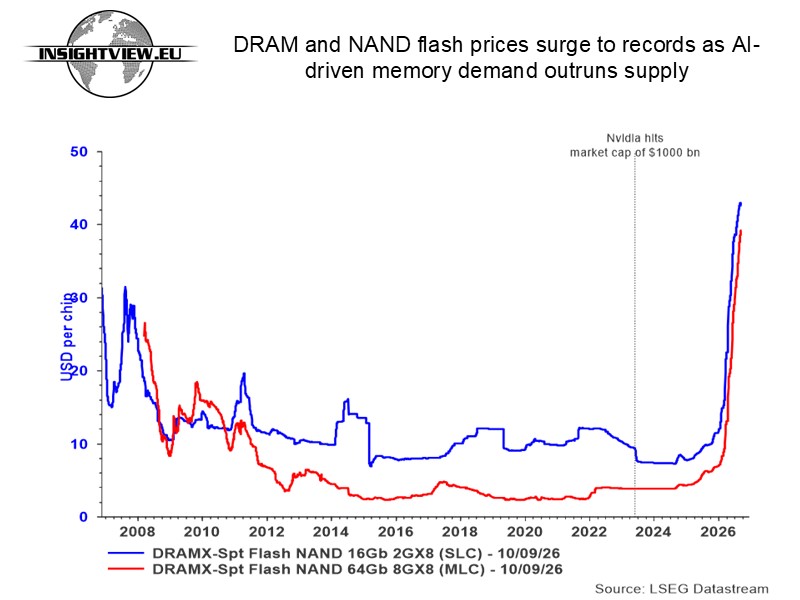
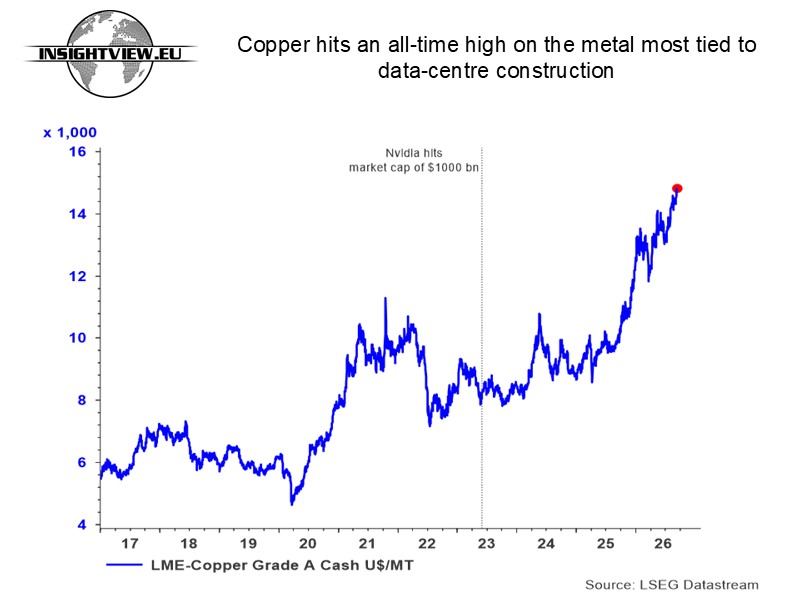
Brent crude above $101 as fighting escalates around the Strait of Hormuz is not, on its own, enough to trigger a durable rise in long-term inflation expectations — oil spikes of this size have come and gone repeatedly since 2022 without resetting the ten-year breakeven. In the short run, however, it has an impact as China's crude oil imports recover from their collapse shortly after the Iran conflict started. In the context of short- and medium-term inflation expectations, what may be underpriced is the scale of Phase 1 AI-driven inflation: DRAM and NAND flash prices have surged to record highs, and copper, the metal most tied to data-centre construction, is trading at a record high.
None of these factors is speculative; it is why the European Central Bank's widely expected quarter-point hike today, to a 2.50% deposit rate, driven largely by a jump in energy inflation to 14.3%, should not be read as a one-off. Europe's own strategic investment boom is only beginning. Therefore, 2027 is likelier to bring further tightening than rate cuts.
A Little Humility Would Help.
In the current global environment, it looks like mission impossible for the US Treasury Secretary. It is a tough task to keep intervening against all odds in the US Treasury market, as the market returns US and Japanese real yields toward historical norms, at a moment when central banks are no longer the buyer of last resort.
Given Washington's minus-73% of GDP net investment position and its dependence on precisely the creditors it is now trying to out-trade, a little more humility from Bessent, and a little less "I am the house," might serve American interests better than the next buyback. Humility is not a trait that prevails in the Trump administration.